

This year, as cryptocurrency adoption reaches unprecedented levels, the focus on safeguarding digital assets and preserving user privacy has never been more critical. With billions of dollars lost annually to hacks, scams, and breaches, the crypto industry is doubling down on security innovations. Among these, Decentralized Identity (DID) systems are emerging as a game-changing solution for protecting user data while enhancing trust in decentralized ecosystems.

The Harsh Reality of Crypto Threats
The cryptocurrency space has always been a high-stakes playground. In 2024 alone, hackers stole over $2 billion through phishing scams, smart contract exploits, and ransomware attacks. Cybercriminals are getting smarter, using AI to automate attacks and target vulnerabilities faster than ever. For every new DeFi protocol or NFT marketplace that launches, there’s a shadowy figure ready to exploit weak code or trick users into surrendering their private keys.
But here’s the twist: while threats are evolving, so are the defenses. The crypto world is fighting back with tools that don’t just react to attacks—they prevent them altogether. At the heart of this revolution is a simple idea: you should own your digital identity, not corporations or governments.
Let’s start with the basics. If you’ve ever used a Ledger or Trezor, you know hardware wallets are the armored trucks of crypto security. These offline devices keep your private keys away from prying eyes, acting as a physical barrier against online threats. But security in 2025 isn’t just about hiding your keys—it’s about rethinking how we verify who we are in the first place.
Enter decentralized identity systems.
Unlike traditional logins (think: usernames and passwords), DID lets you create a digital ID that lives on the blockchain. It’s like a cryptographic passport that you control, which can’t be faked, stolen, or sold to data brokers. Need to prove you’re over 18 to access a platform? A DID system can confirm your age without exposing your birthdate. Want to secure a million-dollar DeFi transaction? Multi-signature wallets combined with DID can ensure no single person can authorize it alone.
How DID Systems Work Their Magic
Here’s where it gets fascinating. When you create a decentralized identity, you’re essentially generating a unique digital fingerprint stored on a blockchain. This fingerprint isn’t tied to your name, address, or Social Security number—it’s just a verifiable proof that you are you.
Take KYC (Know Your Customer) processes, for example. Crypto exchanges have long struggled with balancing privacy and regulatory compliance. With DID, you can prove your identity to an exchange without actually handing over sensitive documents. The exchange gets the verification it needs, and you keep your data out of breach-prone databases. It’s a win-win that’s already being tested by forward-thinking platforms.
The implications are massive. Picture an NFT artist who can irrefutably prove ownership of their work using DID, eliminating plagiarism and fraud. Or a bank using DID to let customers access loans across multiple DeFi platforms without repeating identity checks. Even governments are taking notice—the EU’s digital identity framework, eIDAS 2.0, is paving the way for blockchain-based IDs that work across borders.
But it’s not just about convenience. DID systems are dismantling the “honeypot” problem of centralized data storage. Why hack a single database with millions of identities when each user holds their own keys? This shift could render large-scale breaches obsolete, forcing hackers to target individuals—a far less lucrative strategy.
Of course, no revolution comes without hurdles. For DID to go mainstream, we need seamless user experiences. No one wants to juggle 12 different keys or memorize 20-word seed phrases. Projects like Microsoft’s ION and the Decentralized Identity Foundation are working on solutions that feel as simple as logging in with Google—but without Google holding the keys.
There’s also the question of recovery. Lose your hardware wallet, and you’re locked out of your life. Emerging solutions, like social recovery wallets, allow trusted contacts to help you regain access without compromising security.
The Future of Trust
By 2025, decentralized identity could become the invisible backbone of the internet. Imagine logging into your bank, verifying your medical records, or voting in an election—all through a single DID that you control. For crypto users, this means safer transactions, fewer scams, and a level of privacy that cash can’t even offer.
But the real victory? DID systems don’t just protect your crypto—they protect you. In a world where data is currency, owning your identity is the ultimate form of security.
Disclaimer: This article is for informational purposes only and does not constitute financial advice. Always conduct your own research and consult with a qualified financial advisor before making investment decisions.
Recommended:
 👉 Sign Up for the Crypto Corner Newsletter and get more insight on the crypto markets, new releases and updates, plus my personal choice of coins to trade: https://www.ojjordan.com/crypto-corner
 👉 LearnCryptoNow is the go-to place to get valuable resources and learn more about blockchain tech and all things crypto-related: https://www.learncryptonow.com/
 👉Brave Browser is my top choice for extra security while browsing online. It is privacy-oriented, web3-enabled and blocks unnecessary cookies and much more: https://brave.com/ojj095
 👉Token Metrics is the platform I use for uncovering unknown gems and to monitor my crypto watchlist. They have the most detailed statistics and analysis for all major cryptocurrencies and price predictions to help you find the right coins to trade and the right time to buy/sell – give it a try and get 10% discount: https://bit.ly/token_metrics

Want to know how to make money by investing in crypto?
Grab a copy of my best-selling eBook “Learn Crypto” to find out all about the cryptocurrency market, the different blockchains and the “Do”s and “Don’t”s of how to build a successful crypto portfolio. It’s now in its second edition.Find out more: LearnCryptoNow.com
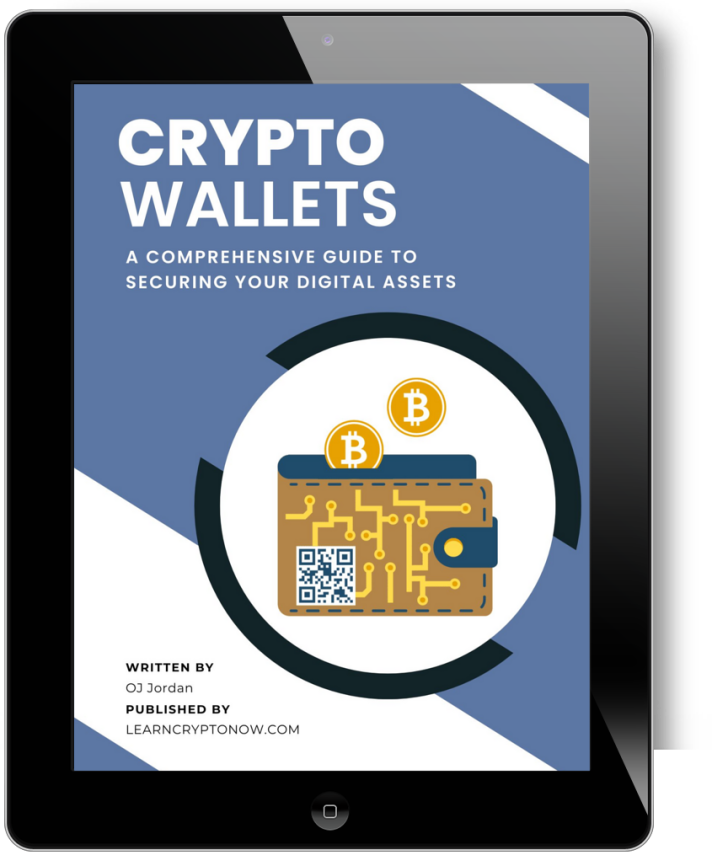
“Crypto Wallets” is a Free eBook to guide you in choosing the right wallet for you. All the popular Hot and Cold Wallets are reviewed in this useful guide, most of which I personally use, or have used in the past. Self-custodial and custodial services too.
Find out more at: https://www.ojjordan.com/crypto
⚠️ DISCLAIMER ⚠️
The information contained in this video is for informational purposes only. Nothing herein shall be construed to be financial or legal advice. The content of this post reflects solely my own opinions. Purchasing cryptocurrencies poses considerable risk of losses.
Quote Of The Day
Passion fuels great work; love transforms work into art. Embrace the challenge for personal growth. #EmbraceTheChallenge #PersonalGrowth

Bitcoin Drops Again. Is It Time To Buy Yet?
Caught between fear and greed, BTC just dropped again this morning, hitting $65k. It’s a move I charted just 4 days ago and without a miss,…
Quote Of The Day
“The only place where success comes before work is in the dictionary.” – Vidal Sassoon This poignant quote underscores the fundamental truth that hard…

 Crypto-Corner