

Just yesterday I learned about a new Bitcoin proposal that aims to redefine the way we think and speak of Bitcoin. At face value, this sounds revolutionary. It’s called BIP 177 and Jack Dorsey drew much attention to this when he posted this ambiguous tweet:
Naturally, as an avid crypto analyst and investor for the past 10 years, I immediately went into a research mode and today I’m reporting to you what this is all about, so let’s dive in.
First, what’s a BIP:
The abbreviation stands for Bitcoin Improvement Proposal and this is how developers can introduce new features, upgrades and any changes to the Bitcoin protocol. These proposals have to be voted for by the community, namely, node operators and developers and should any proposal find a (overwhelming) majority, they get approved for implementation. Many BIPs don’t see the light of day, you don’t hear about them, I will list a few of the key BIPs that have shaped the Bitcoin development over the years, but for the most part, the average bitcoiner is unaware of most of the proposals unless they gain enough traction to be actually considered. Which is what Jack Dorsey is trying to achieve with the tweet above. He draws attention to a new proposal and in this case, it’s a bit of a controversial one because it aims to redefine the way we refer to Bitcoin or should I say, the way we display it.
Let’s elaborate.
For a while now (ever since 2020 at least) Bitcoin’s denomination system has been like a math test. Buying $100 worth of Bitcoin comes to about 0.00097000 BTC and this is still a weird amount for the average Joe. What I mean (and what the authors of the proposal argue) is that as Bitcoin is now in the hundred thousand dollars range, it becomes impractical and elaborate to deal with that many zeroes and in fact not one but two Bitcoin Improvement Proposals, BIP 176 and BIP 177, aim to fix that by making Bitcoin’s units easier to understand and use. These proposals aren’t about rewriting Bitcoin’s core; they’re about sprucing up how amounts are displayed to make the crypto more approachable.
Let’s start with BIP176 and then I’ll focus more on BIP177, which is now causing more of a stir.
BIP 176: Bits Denomination
- About: proposes using “bits” as a standard unit, where 1 bit = 1 microbitcoin (μBTC) = 100 satoshis. This means 1 BTC = 1,000,000 bits. Instead of seeing 0.0001 BTC, you’d see 100 bits, cutting down on decimal places for smaller transactions.
- Goal: Make Bitcoin amounts more intuitive by using a unit that’s easier to grasp than satoshis or BTC fractions, especially for everyday purchases like buying coffee or tipping online.
- Scope: It’s a non-consensus change, meaning it only affects user interfaces (UIs) like wallets and exchanges, not Bitcoin’s blockchain or protocol. Wallets could adopt bits voluntarily, possibly with a toggle to switch between units.
BIP 177: Redefining Bitcoin’s Base Unit
- About: BIP 177, titled “Redefine Bitcoin’s Base Unit,” goes bolder. It addresses the same issue of simplifying Bitcoin’s decimals and the way we read them and suggests dropping the SATS denomination turning 1 satoshi into what we will call 1 “bitcoin” in UI displays but keeping the BTC ticker symbol the way it is today, meaning it defines the same 1 bitcoin we have today.
Basically, 1 BTC = 100,000,000 “bitcoins” in this system. This divorces the Bitcoin and BTC from each other, while right now they are the same thing. For example, 1 BTC will show as 100 million bitcoins (currently these are called sats/satoshis), 0.000001 BTC would show as ₿100 (currently 100 satoshis), and 0.01 BTC would be ₿1,000,000 (currently satoshis). - Goal: Align the UI with Bitcoin’s internal code, which already uses satoshis as whole numbers, to simplify transactions and reduce errors. It aims to make Bitcoin feel like regular money, especially for micropayments or new use cases like DeFi.
- Scope: Like BIP 176, it’s a UI-only change, requiring no changes to Bitcoin’s 21 million coin cap, consensus rules, or blockchain. Wallets might add a toggle for users to opt in or out.
Both proposals are informational, meaning they’re suggestions for the community, not mandatory upgrades. They’re detailed on GitHub: BIP 176 and BIP 177.
Who’s Behind These Proposals?
BIP 176: Jimmy Song
- Proposer: Jimmy Song, a well-known Bitcoin developer, educator, and author, submitted BIP 176 on August 15, 2017.
- Background: Song’s a big name in Bitcoin circles, often teaching developers through books like Programming Bitcoin and speaking at conferences. He saw “bits” as a practical middle ground between BTC and satoshis, making small transactions less clunky without overwhelming users with huge numbers.
- Advocacy: Song’s pushed for bits as a user-friendly unit, arguing it’s intuitive for everyday use while keeping Bitcoin’s precision for larger transactions.
BIP 177: John Carvalho
- Proposer: John Carvalho, known as @BitcoinErrorLog on X, submitted BIP 177 on April 12, 2025.
- Background: Carvalho’s an entrepreneur and Bitcoin advocate who’s all about making Bitcoin accessible. He’s active on X and Stacker News, where he’s pitched BIP 177 as a way to simplify Bitcoin’s UI for newbies and pros alike.
- Advocacy: Carvalho argues that using satoshis as the base unit aligns with Bitcoin’s code and makes tiny transactions—like tipping or DeFi—feel natural. He sees it as key to Bitcoin’s growth as a medium of exchange.
Why Do These Proposals Matter?
Bitcoin’s current system, with 1 BTC split into 100,000,000 satoshis, can be a headache. Small transactions often involve awkward decimals (e.g., 0.00005 BTC), and even satoshis can feel abstract for newcomers. BIP 176 and BIP 177 aim to fix this, each in its own way. Here’s why they could make a difference:
- User-Friendly Displays:
- BIP 176’s bits (100 bits = 0.0001 BTC) offer a manageable unit for daily transactions, like paying $5 for lunch.
- BIP 177’s satoshi-based approach (₿100 = 0.000001 BTC) uses whole numbers, which could be ideal for micropayments or high-value Bitcoin economies.
- Fewer Errors: Decimals increase the risk of mistakes, like sending 0.01 BTC instead of 0.001 BTC. Both proposals reduce this by using simpler numbers.
- Boosting Adoption: A clearer UI could attract more users, especially those intimidated by Bitcoin’s math. This is crucial for mainstream use, from buying groceries to exploring DeFi.
- Supporting Micropayments: As Bitcoin’s price rises, smaller units like bits or satoshis are perfect for tiny transactions, like streaming payments or in-game purchases.
- Future-Proofing Bitcoin: Encouraging spending through easier units could sustain transaction fees for miners, keeping the network secure as block rewards dwindle.
Both proposals could make Bitcoin feel less like a tech puzzle and more like cash, paving the way for broader use in payments, apps, and beyond.
Community Support and Notable Backers
BIP 176
- Supporters: Jimmy Song’s reputation gives BIP 176 some clout, and the “bits” idea has been discussed in Bitcoin circles for years. Some wallets, like BitPay, have experimented with bits, showing limited adoption. However, no major developers or influencers—like Pieter Wuille or Adam Back—have recently championed it as of May 2025.
- Community Vibe: Bits have fans for their simplicity, but the proposal’s age (draft since 2017) and lack of recent momentum suggest it’s not a hot topic. Some users on forums like Bitcointalk prefer satoshis or BTC, seeing bits as an extra layer.
BIP 177
- Supporters: John Carvalho’s the main cheerleader, actively promoting BIP 177 on X and Stacker News. A big boost came from Jack Dorsey, ex-Twitter CEO and Bitcoin advocate, who posted “bip177” on X on May 18, 2025 X post, 18:09 EEST. It’s a cryptic endorsement, but Dorsey’s influence makes it notable. On Stacker News, users like @k00b, @kr, and @siggy47 have voiced support, excited about its potential to simplify Bitcoin’s UI.
- Community Vibe: BIP 177’s newer and has more buzz than BIP 176, thanks to Dorsey’s post. Still, no Bitcoin Core developers (e.g., Pieter Wuille, Andrew Chow) or influencers like Michael Saylor have backed it publicly as of May 19, 2025. Its UI focus means it’s less of a priority for tech-heavy devs.
Both proposals lack widespread developer support, partly because they’re non-consensus changes that don’t require the intense debate of protocol upgrades like SegWit.
The Challenges and Criticism
Not everyone’s sold on BIP 176 or BIP 177. Here’s what critics are saying:
- No Urgent Need: Many users are comfortable with satoshis or BTC, and wallets already simplify conversions. Critics argue both proposals add complexity without solving a pressing problem.
- Confusion Risk: If some apps adopt bits (BIP 176) or satoshi-based displays (BIP 177) and others don’t, users might see inconsistent amounts (e.g., ₿100 vs. 0.000001 BTC), leading to mix-ups.
- Adoption Hurdles: Getting wallets, exchanges, and merchants to agree on a new standard is tough in Bitcoin’s decentralized ecosystem. Partial adoption could undermine both proposals.
- Priority Debate: With bigger issues like scalability, privacy, or Lightning Network upgrades, some developers see UI changes as low on the list.
- Specific to BIP 176: Bits add a new unit, which some see as unnecessary when satoshis already exist. It’s less radical than BIP 177 but feels like a middle ground that hasn’t caught fire.
- Specific to BIP 177: Its huge numbers (e.g., ₿1,000,000 for 0.01 BTC) might overwhelm users, and the shift to satoshis as “bitcoins” could feel jarring.
These concerns show why even straightforward changes face pushback in Bitcoin’s cautious community.
Current Status and What’s Next
As of May 19, 2025, both BIP 176 and BIP 177 are draft proposals on GitHub, with no clear path to adoption or rejection. Here’s where they stand:
- BIP 176: Submitted in 2017, it’s been around longer but hasn’t gained much traction. Its “bits” idea has seen some use in wallets like BitPay, but there’s no recent push to make it a standard. Without renewed advocacy from Song or others, it’s likely to stay dormant.
- BIP 177: Fresh off its 2025 submission, it’s got more buzz, especially after Jack Dorsey’s X post. Discussions on X, Stacker News, and GitHub show interest, but it’s still early days. Its success hinges on wallet providers and exchanges adopting it voluntarily.
Since both are non-consensus changes, they don’t need network-wide upgrades like a soft fork. Instead, they rely on ecosystem players—wallets, exchanges, merchants—choosing to implement them. Without broader support from developers, businesses, or the community, both risk fading into obscurity.
My Take:
BIP 176 and BIP 177 share a common goal: make Bitcoin’s denominations less intimidating and more practical. BIP 176’s bits offer a middle ground, ideal for everyday transactions, while BIP 177’s satoshi-based approach goes all-in on simplicity and future-proofing for a high-value Bitcoin world. Together, they highlight a key challenge—balancing Bitcoin’s technical roots with the need for mainstream appeal.
At first glance, I wanted to keep an open mind and I kinda align with the idea of Jimmy Song (BIP176) that using Bits as single units could make things easier, but I do see several problems with BIP177 and I don’t see how it would gain enough support. For a start, changing satoshis to bitcoins, even solely by name, is going to create more confusion. Those who are already deep into crypto will not find this an easy transition. Then comes the issue that if it’s so hard to work with all these zeroes, then just moving the decimal point will not resolve that. Instead of 0.01 you will say 1,000,000 and the zeroes of this are just as confusing. The idea that working with larger numbers is a bit of a hopium. Right now it might be convenient, but as things progress and price keeps rising, one day BTC could hit a million dollars and then 1 sat will equal 1 cent (US). In this case, since we’re talking about buying coffee, will you be happy to pay 5,000 sats (or bits/bitcoins, whatever they wanna call it) – only in countries with the worst economies a coffee price is in the thousands and this is also inconvenient. I just came back from Vietnam. If you think it’s easier to work with millions or hundreds of thousands on a day to day basis, you’re wrong. It is just as confusing as today 0.000045 might seem. So, in effect, the proposal aims to address one issue, but carries several other issues with it. This is not a solution. What is the point of going through radical changes if we are introducing more problems. I’m not asking really, I am merely pointing out how pointless this whole affair is and I for one don’t want to entertain it.
Notable BIPs from the past:
There have been several important improvement proposals to the Bitcoin protocol, that have been implemented and these you should know about.
BIP 16: Pay-to-Script-Hash (P2SH)
Proposed by Gavin Andresen in January 2012, BIP 16 introduced Pay-to-Script-Hash (P2SH), a game-changer for Bitcoin’s flexibility and security. P2SH lets users send transactions to a script hash—a cryptographic fingerprint of a script—rather than a single public key, enabling multisignature (multisig) transactions (e.g., requiring 2-of-3 signatures to spend). Activated via a soft fork in April 2012, it made multisig wallets practical for exchanges and businesses, reducing theft risks, and opened doors for complex scripts like escrow or time-locked payments. Today, P2SH is a standard in most wallets, proving its lasting impact on secure and versatile Bitcoin transactions.
BIP 32: Hierarchical Deterministic Wallets
In February 2012, Pieter Wuille’s BIP 32 brought us Hierarchical Deterministic (HD) wallets, revolutionizing how we manage Bitcoin keys. HD wallets generate a tree of private and public keys from a single seed phrase (like 12-24 words), letting users create new addresses without backing up each one. This made wallets like Trezor and Electrum user-friendly, improved privacy by encouraging fresh addresses per transaction, and became the standard for modern wallet design. If you’ve ever restored a wallet with a seed phrase, BIP 32 is why—it’s a cornerstone of Bitcoin’s usability and security.
BIP 66: Strict DER Signatures
Pieter Wuille proposed BIP 66 in July 2014 to tighten Bitcoin’s security with Strict DER (Distinguished Encoding Rules) for transaction signatures. This fixed transaction malleability, where attackers could tweak a transaction’s ID without changing its content, potentially disrupting unconfirmed payments. Activated via a soft fork in July 2015, BIP 66 ensured reliable transaction IDs, paving the way for second-layer solutions like the Lightning Network. Its impact is subtle but critical, making Bitcoin’s transactions more robust and supporting scalable off-chain systems.
BIP 91: SegWit Activation (Reduced Threshold)
In May 2017, James Hilliard’s BIP 91 tackled the heated scaling debate by lowering the activation threshold for Segregated Witness (SegWit) (BIP 141). This user-driven push ensured SegWit’s soft fork activated in August 2017, avoiding delays from miner resistance. By enabling SegWit, BIP 91 increased block capacity (up to ~4 MB), fixed transaction malleability, and unlocked the Lightning Network for fast, low-cost off-chain transactions. Its role in resolving the “block size wars” made BIP 91 a pivotal moment in Bitcoin’s scaling journey.
BIP 141: Segregated Witness (SegWit)
Proposed in December 2015 by Pieter Wuille and others, BIP 141’s Segregated Witness (SegWit) was a landmark soft fork activated in August 2017. SegWit separates signature data (witness) from transactions, fixing malleability, boosting block capacity, and enabling new address types (e.g., “bc1”). It cut fees, improved privacy by reducing address reuse, and made the Lightning Network possible. Widely adopted, SegWit transformed Bitcoin’s scalability and opened doors for advanced features, cementing its place as one of Bitcoin’s biggest upgrades.
BIP 148: User-Activated Soft Fork (UASF)
Shaolinfry’s BIP 148, proposed in March 2017, was a bold community move to force SegWit activation by August 1, 2017, via a User-Activated Soft Fork (UASF). It pressured miners to adopt SegWit, contributing to its success through BIP 91. Running until November 2017, BIP 148 showed that users and nodes, not just miners, could shape Bitcoin’s future. This grassroots effort remains a historic example of Bitcoin’s decentralized governance in action.
BIP 341: Taproot
Proposed in January 2018 by Pieter Wuille, Tim Ruffing, and others, Taproot is Bitcoin’s most recent major upgrade, activated in November 2021. Combining Schnorr signatures and Merkelized Abstract Syntax Trees (MAST), Taproot hides complex transactions (e.g., multisig, Lightning channels) as regular ones, boosting privacy. It also cuts data size for complex scripts, lowering fees, and enables advanced smart contracts. Widely supported, Taproot enhances Bitcoin’s efficiency and opens new possibilities for DeFi and beyond.
Why These BIPs Matter
These eight BIPs have shaped Bitcoin into a secure, scalable, and versatile network. From BIP 16’s multisig security to BIP 341’s privacy boost, they’ve addressed critical needs—security (BIP 32, 66), scalability (BIP 91, 141), privacy (BIP 141, 341), usability (BIP 70), and governance (BIP 148). As of May 19, 2025, their impact is evident in widespread Lightning Network use, universal HD wallets, and growing Taproot adoption.
Recent BIPs like BIP 176 and 177 (UI-focused, with Jack Dorsey’s May 18, 2025, X post noting “bip177”) show ongoing innovation, but these classics remain Bitcoin’s foundation.

And if you want to find out what other Bitcoin units and denominations have already been discussed (and some have been used for some time) you can get this free eBook (pdf) where I break it down for you.
☝Disclaimer: This article is for informational purposes only and does not constitute financial advice. Always conduct your own research and consult with a qualified financial advisor before making investment decisions.
Recommended:
 👉 Sign Up for the Crypto Corner Newsletter and get more insight on the crypto markets, new releases and updates, plus my personal choice of coins to trade: https://www.ojjordan.com/crypto-corner
 👉 LearnCryptoNow is the go-to place to get valuable resources and learn more about blockchain tech and all things crypto-related: https://www.learncryptonow.com/
 👉Brave Browser is my top choice for extra security while browsing online. It is privacy-oriented, web3-enabled and blocks unnecessary cookies and much more: https://brave.com/ojj095
 👉Token Metrics is the platform I use for uncovering unknown gems and to monitor my crypto watchlist. They have the most detailed statistics and analysis for all major cryptocurrencies and price predictions to help you find the right coins to trade and the right time to buy/sell – give it a try and get 10% discount: https://bit.ly/token_metrics

Want to know how to make money by investing in crypto?
Grab a copy of my best-selling eBook “Learn Crypto” to find out all about the cryptocurrency market, the different blockchains and the “Do”s and “Don’t”s of how to build a successful crypto portfolio. It’s now in its second edition.Find out more: LearnCryptoNow.com
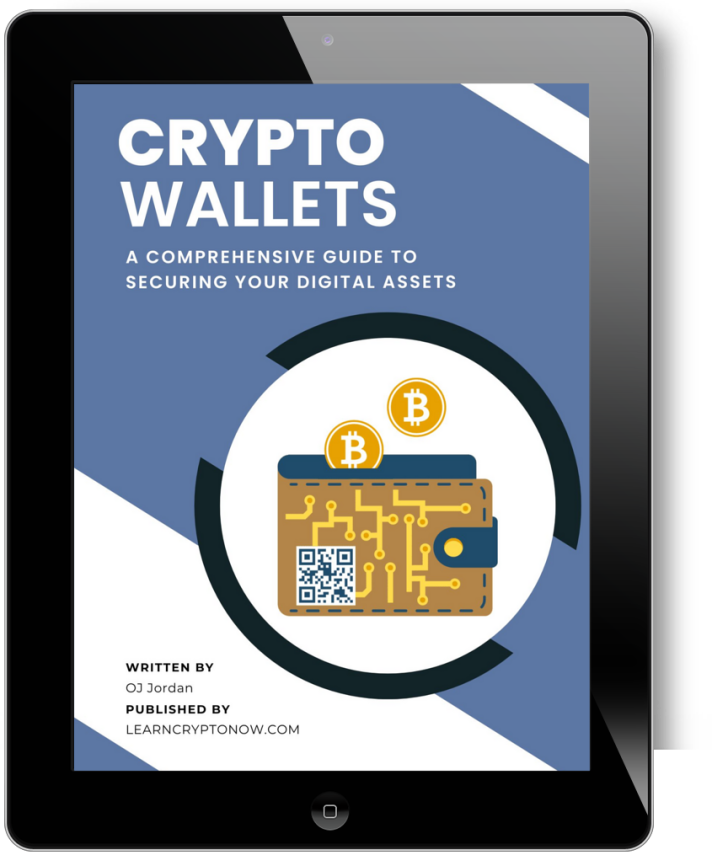
“Crypto Wallets” is a Free eBook to guide you in choosing the right wallet for you. All the popular Hot and Cold Wallets are reviewed in this useful guide, most of which I personally use, or have used in the past. Self-custodial and custodial services too.
Find out more at: https://www.ojjordan.com/crypto
⚠️ DISCLAIMER ⚠️
The information contained in this video is for informational purposes only. Nothing herein shall be construed to be financial or legal advice. The content of this post reflects solely my own opinions. Purchasing cryptocurrencies poses considerable risk of losses.
Quote Of The Day
“You are never too old to set another goal or to dream a new dream.” – C.S. Lewis Age is not a barrier to…

Quote Of The Day
Passion fuels great work; love transforms work into art. Embrace the challenge for personal growth. #EmbraceTheChallenge #PersonalGrowth
Bitcoin Drops Again. Is It Time To Buy Yet?
Caught between fear and greed, BTC just dropped again this morning, hitting $65k. It’s a move I charted just 4 days ago and without a miss,…

 Crypto-Corner