

Layer 1s have become a hot topic during this bull cycle as their tokens were among the early major pumps back in the end of 2023, and some (like Solana and Avalanche) made explosive ROI for those who were accumulating throughout the preceding bear cycle. Today I will explore the top Layer-1 blockchains that are making significant impacts in the crypto space. These blockchains provide the foundational infrastructure for decentralized applications (dApps) and other blockchain technologies. Typically, their use case and popularity translates into price appreciation, but we do have a few examples of Layer 1 tokens that are underperforming in this cycle, so those will be sitting at the bottom of my list.
1. Ethereum (ETH)
Ethereum is often referred to as the “world computer” of blockchain technology. It is the most decentralized Layer-1 blockchain and boasts the largest developer community with a thriving dApp ecosystem of over 300,000 active applications. It was the first dApps platform and it certainly sits on the top of the list (for now).
Key Features:
- Largest developer community
- Upcoming Ethereum 2.0 upgrade for better scalability
- Over 3,000 active dApps
2. Solana (SOL)
Solana is known for its high throughput and low transaction costs. It has demonstrated the capability of handling around 65,000 transactions per second (TPS) in testing conditions and processes just over 2,000 TPS on average. Solana’s transactions achieve finality in about 12 seconds, making it one of the fastest Layer-1 blockchains right now, but it suffers from occasional outages, still not entirely decentralised and yet, it’s one of the driving forces in this cycle, with most of the tokens built on Solana having extremely good performance (price-wise) this cycle, hence why it takes the second place (for now).
Key Features:
- Handles 65,000 TPS in testing, 2,000 TPS on average
- Transaction finality in about 12 seconds
- Low transaction costs
3. Avalanche (AVAX)
A close third, is Avalanche is a high-performance, scalable Layer-1 blockchain platform designed for decentralized applications and custom blockchain networks. It processes roughly 3.5 transactions per second on the C-Chain and achieves finality in about one second. Avalanche is EVM compatible and offers a suite of blockchain deployments and tooling designed to address specific needs of various industries.
Key Features:
- Processes 3.5 TPS on the C-Chain
- Transaction finality in about one second
- EVM compatible
4. Bitcoin (BTC)
The only reason Bitcoin isn’t first on my list, is its slow speed and problems with scalability, which is one of the reasons why we still don’t have mass adoption of it as a currency. But Bitcoin is the pioneer of cryptocurrencies and remains a cornerstone in the Layer-1 domain. Known for its robust security, Bitcoin faces challenges in scalability and transaction speed, but it remains the most recognized and widely used cryptocurrency.
Key Features:
- Pioneer of cryptocurrencies
- Robust security
- Challenges in scalability and transaction speed
5. Binance Smart Chain (BSC)
Binance Smart Chain (BSC) is highly scalable and EVM compatible, allowing for easy porting of Ethereum dApps. However, it lacks meaningful decentralization, with over 50% of its tokens controlled by the entity that launched the chain. BSC’s dual-chain architecture enables interoperability through the native BNB token.
Key Features:
- High scalability
- EVM compatible
- Dual-chain architecture for interoperability
6. Near Protocol (NEAR)
Near Protocol is known for its innovative approach to scalability, usability, and developer-friendliness. It is highly scalable and focuses on enabling the Web3 ecosystem. This year the NEAR token was having some very strong rallies and it’s outperforming many other Layer 1s in terms of price action. The token is 40% up from the start of the year despite the current market pullback.
Key Features:
- Innovative scalability solutions
- Developer-friendly
- Focus on Web3
7. Cosmos (ATOM)
Cosmos is a decentralized network of independent blockchains designed to address scalability and interoperability issues. It is known as the “Internet of blockchains” and has a thriving ecosystem.
Key Features:
- Decentralized network of independent blockchains
- Focus on scalability and interoperability
- Thriving ecosystem
8. Algorand (ALGO)
Algorand can handle around 6,000 transactions per second in theory and processes just under 30 TPS in practice. Transactions achieve “instant” finality, limited in practice by the block time of about every 3 seconds. Algorand focuses on decentralized finance (DeFi) and has an award-winning team.
Key Features:
- Handles 6,000 TPS in theory, 30 TPS in practice
- Instant transaction finality
- Focus on DeFi
9. Cardano (ADA)
Cardano seems to be almost dead this cycle. No major moves since the start of this year, 39% down from the beginning of 2024… it’s losing its appeal and its position in the top 10 cryptos by mcap. It’s a project with a huge community, but it needs new blood to be able to stay on top. It’s not a bad project, it utilizes a PoS consensus mechanism called Ouroboros and a layered architecture separating the settlement and computation layers. Known for its peer-reviewed research and evidence-based methods, Cardano processes roughly 2 transactions per second on average, with transactions considered final in between 2 and 25 minutes.
Key Features:
- PoS consensus mechanism (Ouroboros)
- Layered architecture
- Peer-reviewed and evidence-based development
10. Polkadot (DOT)
Polkadot sadly takes the last spot this time, simply because it’s had a terrible performance this cycle. Like ADA, the DOT token is 40% down since the start of the year and it’s not had any significant rallies at all this cycle. Seems like the tech is irrelevant to the buyers and the appetite for DOT has dried up. Still, it’s a great project, an interoperable ecosystem with a multi-chain architecture, allowing it to process many transactions on multiple chains simultaneously. Polkadot 2.0 aims to make it more attractive to web 2 businesses adopting web 3 frameworks.
Key Features:
- Multi-chain architecture for interoperability
- Aims to attract web 2 businesses to web 3
Key Differences Between Major Layer-1 Blockchains
Scalability:
- Solana: High throughput with 65,000 TPS in testing and 2,000 TPS on average.
- Avalanche: Processes 3.5 TPS on the C-Chain and achieves finality in about one second.
- Algorand: Can handle 6,000 TPS in theory and processes 30 TPS in practice.
- Ethereum: Processes about 14 TPS in practice, with Ethereum 2.0 aiming to improve scalability.
Consensus Mechanism:
- Ethereum: Transitioning to PoS with Ethereum 2.0.
- Cardano: Uses PoS consensus mechanism called Ouroboros.
- Polkadot: Uses a sharded multi-chain approach.
Decentralization:
- Ethereum: Most decentralized Layer-1 blockchain.
- Cardano: Highly decentralized with over 10 million blocks and no failures or hacks.
- Binance Smart Chain: Lacks meaningful decentralization with over 50% of tokens controlled by the entity that launched the chain.
Interoperability:
- Polkadot: Interoperable ecosystem with multi-chain architecture.
- Cosmos: Designed to address interoperability issues in blockchain technology.
Use Cases:
- Ethereum: Thriving dApp ecosystem with over 3,000 active applications.
- Avalanche: Focuses on decentralized applications and custom blockchain networks.
- Near Protocol: Focuses on scalability, usability, and developer-friendliness.
So, there you have it. These are the top Layer 1s right now. Other notable mentions are: Injective, Hyperlane, Succinct, Astar and Kadena networks and at any moment these can move up my list and replace some of the current ones. It will depend on their price performance in the coming months.
Recommended:
 👉 Sign Up for the Crypto Corner Newsletter and get more insight on the crypto markets, new releases and updates, plus my personal choice of coins to trade: https://www.ojjordan.com/crypto-corner
 👉 LearnCryptoNow is the go-to place to get valuable resources and learn more about blockchain tech and all things crypto-related: https://www.learncryptonow.com/
 👉Brave Browser is my top choice for extra security while browsing online. It is privacy-oriented, web3-enabled and blocks unnecessary cookies and much more: https://brave.com/ojj095
 👉Token Metrics is the platform I use for uncovering unknown gems and to monitor my crypto watchlist. They have the most detailed statistics and analysis for all major cryptocurrencies and price predictions to help you find the right coins to trade and the right time to buy/sell – give it a try and get 10% discount: https://bit.ly/token_metrics

Want to know how to make money by investing in crypto?
Grab a copy of my best-selling eBook “Learn Crypto” to find out all about the cryptocurrency market, the different blockchains and the “Do”s and “Don’t”s of how to build a successful crypto portfolio. It’s now in its second edition.Find out more: LearnCryptoNow.com
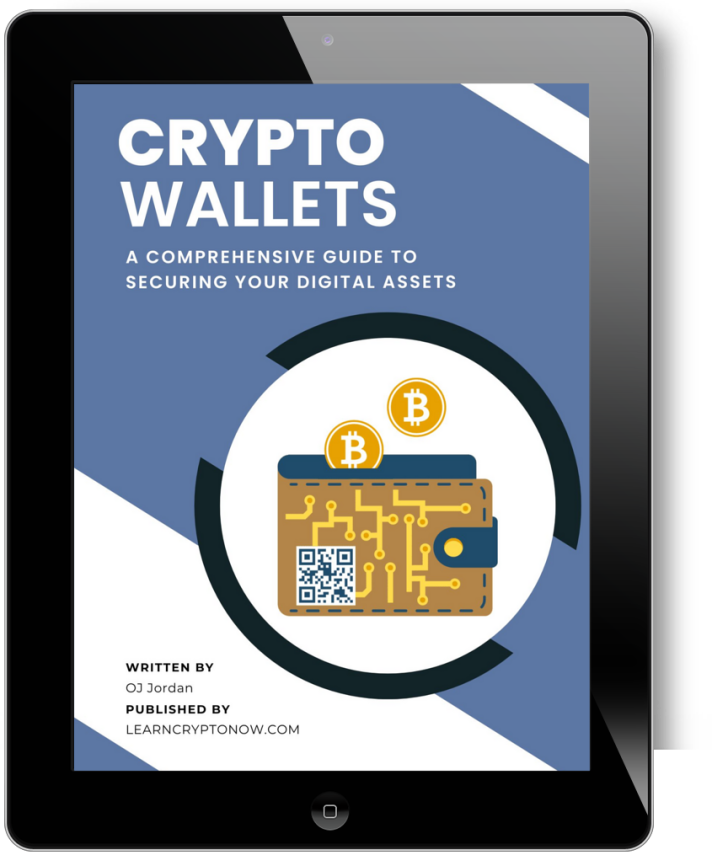
“Crypto Wallets” is a Free eBook to guide you in choosing the right wallet for you. All the popular Hot and Cold Wallets are reviewed in this useful guide, most of which I personally use, or have used in the past. Self-custodial and custodial services too.
Find out more at: https://www.ojjordan.com/crypto
⚠️ DISCLAIMER ⚠️
The information contained in this video is for informational purposes only. Nothing herein shall be construed to be financial or legal advice. The content of this post reflects solely my own opinions. Purchasing cryptocurrencies poses considerable risk of losses.
They Borrowed Millions Using Their Own Token $WLFI… Now the Pool Is Drained
Trump’s crypto project just used its own made-up token to drain $150 million from investors. And the company claims it’s by design. Here’s what…

How the ‘Clarity Act’ Will Affect Your Altcoin Bags
The Digital Asset Market Clarity Act (CLARITY ACT) is a landmark piece of U.S. legislation designed to replace “regulation by enforcement” with a formal…
All Major Crypto Hacks To Date (Updated List)
243 Entries to date. Last updated in Apr 2026. In this post, I collected data from various sources to compile a comprehensive list of…

 Crypto-Corner