
The week Wall Street went full crypto.
- Wall Street made its fastest move yet toward blockchain this week.
- Bitcoin fell 6% as a new Fed Chair, hot inflation and a Taiwan warning stacked up.
- The Clarity Act cleared its biggest Senate hurdle in four months.
- Hyperliquid restructured the economics of stablecoin yield for all of DeFi.
Here’s what happened:
Race of the Week
Wall Street made its most coordinated push yet to move traditional securities onto blockchain rails.
The SEC is preparing an “innovation exemption” that would let trading platforms offer tokenized stocks under a lighter regulatory structure, with a formal release expected as early as this week.
The Depository Trust and Clearing Corporation, which processes the bulk of US securities market transactions, plans its first limited tokenized asset trades in July ahead of a full October rollout, backed by holdings already inside its infrastructure. JPMorgan filed plans with the SEC for a blockchain-based money market fund investing in short-term US Treasuries on Ethereum, while Nasdaq received SEC approval for its own tokenized securities plan back in March.
Moody’s this week assigned its highest credit rating to tokenized money market funds from Fidelity and BlackRock, a first for the asset class.
The combined moves amount to the largest institutional bet on blockchain finance since the launch of spot bitcoin ETFs.
Movement of the Week
Bitcoin fell roughly 6% this week, sliding from $82,000 to $76,673 as macro pressures arrived at once. Two back-to-back inflation prints, a 3.8% CPI followed by a 1.4% month-over-month PPI reading, raised fears that Federal Reserve rates will stay elevated through the year.
The Senate confirmed Kevin Warsh as the new Fed Chair in a 51-45 vote; he has already signaled no rate cuts in 2026.
Xi Jinping’s direct Taiwan warning to Trump during the Beijing summit rattled Asian markets further. US spot bitcoin ETFs shed over $1.5 billion since May 7, including $648 million in a single day, the largest daily outflow since January.
BTC trades at $76,673, down 0.74% in 24 hours. ETH fell 1.1% to $2,109.53.
Victory of the Week
The Senate Banking Committee voted 15-9 on May 14 to advance the Clarity Act to the full Senate, with Democrats Ruben Gallego and Angela Alsobrooks crossing the aisle in a last-minute deal brokered by Chairman Tim Scott. I wrote a detailed article outlining the importance of the Clarity Act for anyone who trades or holds altcoins, you can read it here.
The bill passed with registration rules for crypto trading venues, an SEC/CFTC jurisdictional split, stablecoin yield restrictions and legal protections for DeFi developers.
An ethics provision barring government officials from crypto business ties remains unresolved and will be a key condition for several Democrats on the final floor vote. The bill now merges with the Agriculture Committee version before advancing, with the White House targeting July 4 for passage. Industry groups called the vote a “defining moment for American leadership,” while banking trade associations said the stablecoin yield language still needs strengthening.
Daily crypto updates on X 👉 @busyjordy
Deal of the Week
Hyperliquid reached an agreement with stablecoin issuer Circle that hands the protocol roughly 90% of the reserve income generated by USDC deposits on its platform, reversing the standard model where most of that yield flows back to the issuer. The platform holds more than $5 billion in USDC, generating an estimated $180 million in annual gross profit for Circle and its partners. Under the new Aligned Quote Asset framework, Hyperliquid captures most of that yield while Circle handles minting, redemptions and cross-chain infrastructure. Analysts estimate the deal could remove $60 to $80 million in annual earnings from Circle and its partners, and warned that other DeFi protocols will now demand similar terms from stablecoin issuers.
Watch Out For:
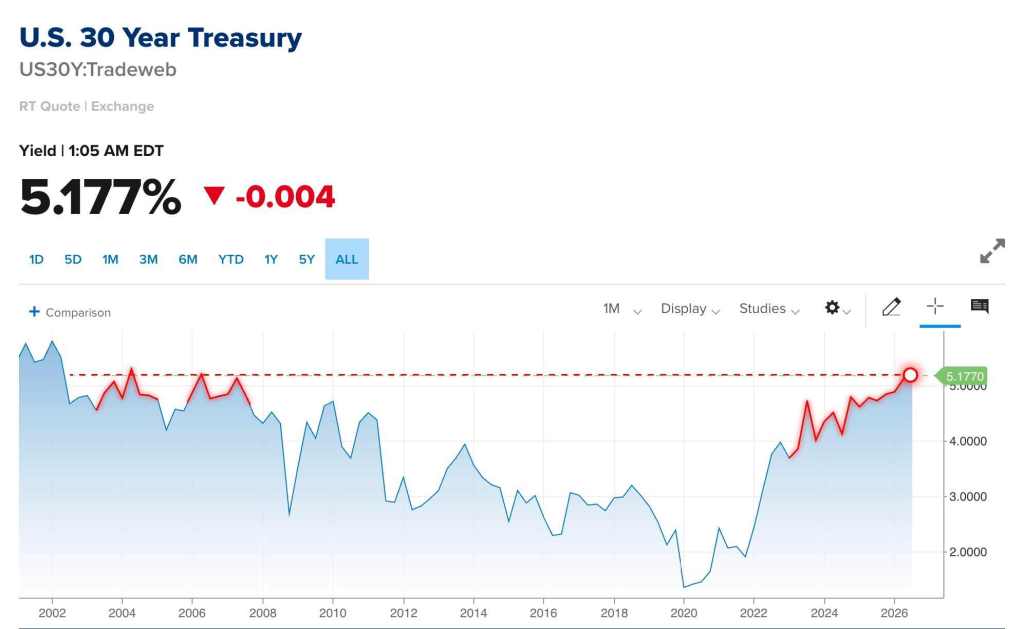
The 30-year US Treasury yield is at 5.177% now, even higher than the 2000s era. US Treasuries are framed as a “risk-free” investment. In short, you get a fixed return with almost zero risk, backed by the US government.
The problem lies in the risk premium, which is the extra return you demand for choosing a riskier investment over the risk-free one. If the risk-free rate (with no drawdowns) is only slightly below the returns of risky assets, many wouldn’t bother with the volatility of riskier assets.
This applies to both BTC and the S&P 500. Especially now, with crypto in a bear market and the S&P 500 at ATH, this could trigger massive selling pressure.
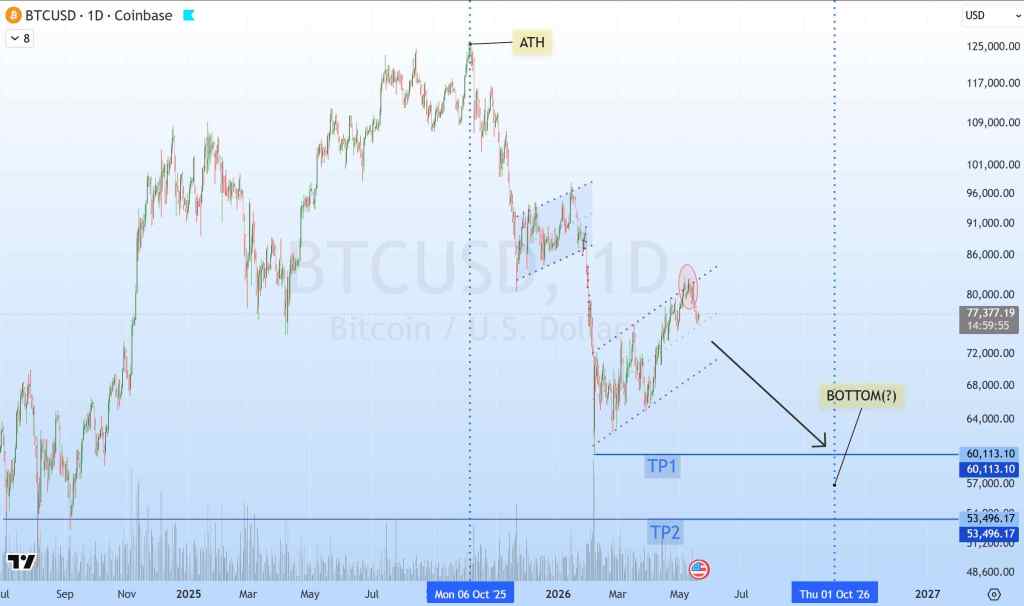
For the coming weeks I expect a continuation of the downtrend and my target timeframe for bottomming of this cycle remains around October this year. Until I see a break of structure, I would not change my outlook.
I will update you on Bitcoin’s price projections soon, stay tuned.
☝Disclaimer: This article is for informational purposes only and does not constitute financial advice. Always conduct your own research and consult with a qualified financial advisor before making investment decisions.
Stay informed and level up your crypto strategy
 Sign Up for the Crypto Corner Newsletter and join 10,000+ users to receive my monthly updates and market analysis and keep up to date with the latest releases and developments in the crypto arena.
👉Go to LearnCryptoNow.com for free guides, tutorials and all things crypto

Billion-dollar Crypto Scams and How to Avoid Them
The crypto landscape is rife with scams, including Ponzi schemes and fraudulent exchanges that have led to immense financial losses. The article details all…

Why I stopped using Coinbase
CRYPTO CORNER VIDEO PODCAST #765 Coinbase is caught in a massive public showdown over allegations of covering up hacks. It started when a trader…
Upcoming Events Affecting the Markets
As Q4 begins, crypto markets are entering one of the most important macro periods of the year. While protocol upgrades and token unlocks will…


