

The year is 2011, the Bitcoin community is a small group of cypherpunks on their path to change the world. They’re meeting on the Bitcointalk forum, exchanging ideas, raising concerns, and proposing solutions to a newly launched digital money called Bitcoin. It’s the first cryptographically protected, digital form of money, still uncertain, still experimental.
The cryptocurrency has been active for just about a year already, and Satoshi Nakamoto, its creator, is highly active in these discussions. He replies to threads, talks about technical details, and helps guide development. The conversations are focused. Network security, incentives, potential attack vectors. It’s a small group, and Satoshi is directly involved in shaping Bitcoin as it grows.
But toward the end of 2010, that begins to change.
His forum activity slows down. Then it stops.
Bitcoin continues moving forward, but without its creator visibly present. Early contributors, like Gavin Andresen, begin taking on more responsibility. Among them is Mike Hearn, an early developer working closely on the project and in direct contact with Satoshi.
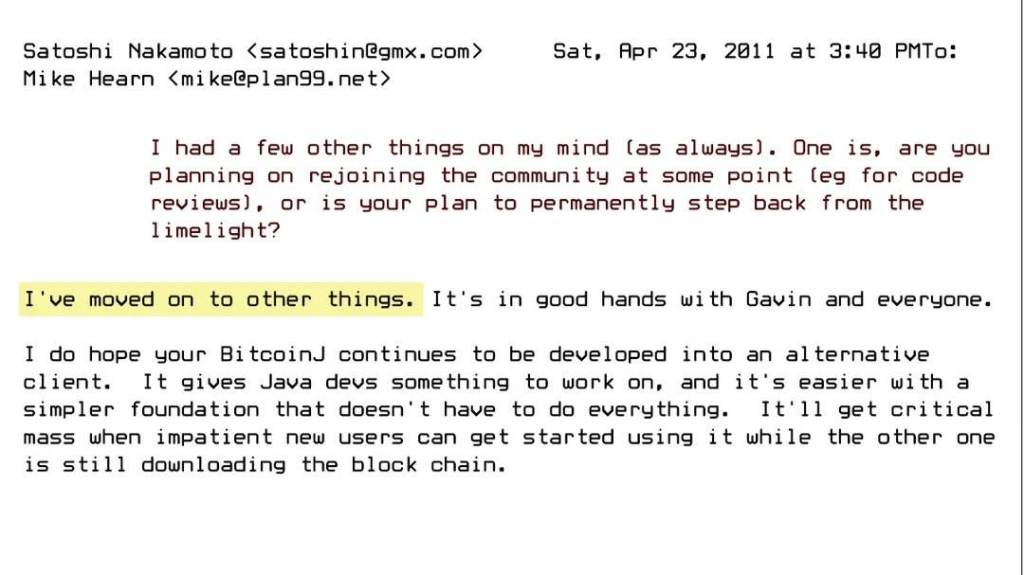
By April 2011, Satoshi’s absence is noticeable enough that Hearn reaches out to him privately, asking if he plans to return.
Satoshi’s reply is short:
“I’ve moved on to other things. It’s in good hands with Gavin and everyone…”
That was the last anyone ever heard from him.
No return to the forums. No further emails. No explanation.
Just silence.
Importantly, this was the biggest gift to the cryptocurrency since it removed the one truly vulnerable point of failure:
that of authority.
You see, with every following crypto project out there, there’s always a central figure (founder), or a group of founders, who will be driving development and have the authority to influence decisions on future developments. This is not the case with Bitcoin. And it’s one of its strongest advantages.
There is no CEO to pressure, no founder to target, no single voice that can dictate its direction. Every change, every upgrade, every decision must emerge from consensus rather than command.
By stepping away, Satoshi didn’t weaken Bitcoin, he made it antifragile.
He ensured that the system could survive not just without him, but without anyone.
And that’s what makes Bitcoin different.
It doesn’t rely on trust in a person.
Only in code.
Today we mark 15 years since Satoshi’s disappearance. Despite all attempts to uncover his identity, we still don’t have the answer.
And for the sake of Bitcoin’s future, I sure hope we keep it that way.
☝Disclaimer: This article is for informational purposes only and does not constitute financial advice. The content of this post reflects solely my own opinions. Purchasing cryptocurrencies poses considerable risk of losses.
 Sign Up for the Crypto Corner Newsletter and join 10,000+ users to receive my monthly updates and market analysis and keep up to date with the latest releases and developments in the crypto arena.
👉Go to LearnCryptoNow.com for free guides, tutorials and all things crypto

Daily Wisdom
“Your future is created by what you do today, not tomorrow.” 🌄 #TakeControl #OwnYourJourney

Warning: AI Attacks Numerous Websites Worlwide
If you’ve noticed a few of your favourite websites acting strangely or going offline over the past few days, you’re not imagining it. Two…
Daily Wisdom
“The only person you are destined to become is the person you decide to be.” – Ralph Waldo Emerson Your destiny is in your…


