
Ever wondered what’s the difference between Nested Segwit, Native Segwit or Legacy wallet address for your Bitcoin? Many hardware wallets offer the choice, but how do you know what is best to use? Let’s explore.
Bitcoin has evolved significantly since its inception, leading to the development of various address types designed to enhance efficiency, privacy, and transaction costs. This evolution reflects the growing needs of users and the increasing complexity of transactions within the Bitcoin network. As Bitcoin continues to gain traction as a digital currency and a store of value, understanding these address types becomes essential for anyone looking to navigate the ecosystem effectively.
Understanding Bitcoin Address Types
Each Bitcoin address type serves a specific purpose and is tailored to different use cases. From the original Legacy addresses that have stood the test of time to the latest innovations like Taproot, these formats offer varying levels of efficiency, transaction speed, and privacy features.
Users must recognize that while newer address types often provide benefits such as reduced fees and improved scalability, older formats still play a crucial role in the network’s infrastructure.
This article delves into each address type, highlighting their unique characteristics, practical applications, and how they fit into the broader landscape of Bitcoin transactions.
As we explore these address types, it’s important to consider how they interact with different wallets. Many modern wallets offer support for multiple address formats, allowing users to choose based on their preferences and needs. However, not all wallets are created equal; some may limit users to specific address types. This flexibility is vital for optimizing transaction costs and enhancing user experience in an ever-evolving digital currency landscape.
The primary Bitcoin address formats are: Legacy, Nested SegWit, Native SegWit, and Taproot. In very simple words, the differences stem from the various upgrades and changes to the Bitcoin protocol (a.k.a. forks) that have occurred over time. Legacy addresses are the first type of BTC wallet address that was introduced from the start. In 2017 we had a major change in the Bitcoin protocol that allowed for more transactions to fit on a block, this was through Segwit (short for segregated witness, you can read about it here). That gave birth to a new format for BTC addresses (starting with 3 instead of 1) and just a few years back, we had the Taproot upgrade, which also allowed for a new format to be introduced. All of these formats co-exist and are usable currently.
1. Legacy Addresses (P2PKH)
Legacy addresses are primarily used for compatibility with older wallets and services that do not support newer address types. I hold several of these simply because I have coins sitting in wallets since 2016. I am slowly moving away from this format.
- Format: Starts with the digit 1.
- Example:
1A1zP1eP5QGefi2DMPTfTL5SLmv7DivfNa - Characteristics:
- The original Bitcoin address format.
- Less space-efficient, resulting in higher transaction fees.
- Offers lower anonymity compared to newer formats.
2. Nested SegWit Addresses (P2SH)
Nested SegWit addresses serve as a transitional solution for users migrating from Legacy addresses. This is the format I am most comfortable with as it is widely supported and has been around since 2017.
- Format: Starts with the digit 3.
- Example:
3J98t1WpEZ73CNmQviecrnyiWrnqRhWNLy - Characteristics:
- Combines features of Legacy and Native SegWit.
- Allows Legacy wallets to send funds to SegWit addresses while benefiting from lower fees.
- More efficient than Legacy but less so than Native SegWit.
3. Native SegWit Addresses (P2WPKH)
Native SegWit is often recommended for users looking to optimize transaction costs while maintaining broad compatibility. This is my second-most used type of addresses. For new users it might be the only type they’re familiar with, so it’s quite widespread and commonly used nowadays.
- Format: Starts with bc1q.
- Example:
bc1qar0srrr7xfkvy5l643lydnw9re59gtzzwf5mdq - Characteristics:
- Utilizes a more efficient scripting language (Segregated Witness).
- Reduces transaction size and fees significantly compared to Legacy addresses.
- Better compatibility with most wallets and exchanges.
4. Taproot Addresses (P2TR)
This is currently the latest change and one that is still quite new. While Taproot offers advanced new features, its adoption is still growing, and not all exchanges support it yet. I choose not to use it yet.
- Format: Starts with bc1p.
- Example:
bc1puaz84y65g0jh7zlhwv9vwhuu3se8ldf82lk5ca6zru6kdny2zvws69x6jd - Characteristics:
- Introduced in late 2021 as part of a major upgrade to enhance privacy and scalability.
- Supports complex multi-signature transactions that appear as ordinary transactions, improving privacy.
- Uses the Bech32m encoding scheme for better efficiency.
Key Differences Between Address Types
| Address Type | Prefix | Transaction Fees | Compatibility | Use Case |
|---|---|---|---|---|
| Legacy (P2PKH) | 1 | High | Limited | Older wallets |
| Nested SegWit (P2SH) | 3 | Moderate | Moderate | Transitioning from Legacy |
| Native SegWit (P2WPKH) | bc1q | Low | High | General use |
| Taproot (P2TR) | bc1p | Very Low | Growing | Advanced privacy features |
Wallet Selection
When choosing a wallet for Bitcoin transactions, it’s crucial to consider which address types are supported. Some hardware wallets provide options for all address types, while others may limit you to specific formats.
Supported Bitcoin Address Types by Hardware Wallets
- Trezor: Legacy, Nested SegWit, Native SegWit, Taproot. check it out
- Ellipal: Legacy, Nested SegWit, Native SegWit. check it out
- Keystone: Legacy, Nested SegWit, Native SegWit. check it out
- OneKey: Legacy, Nested SegWit, Native SegWit, Taproot. check it out
- Ledger: Legacy, Nested SegWit, Native SegWit, Taproot. check it out
- SecuX: Legacy, Nested SegWit, Native SegWit. check it out
- Tangem: Legacy, Nested SegWit. check it out
- Keevo: Legacy, Nested SegWit, Native SegWit. check it out
- Safepal: Legacy, Nested SegWit, Native SegWit. (review pending)
- BitBox 02: Legacy, Nested SegWit, Native SegWit. check it out
- Coolwallet Pro: Legacy, Nested SegWit, Native SegWit. check it out
- Coldcard: Legacy, Nested SegWit, Native SegWit, Taproot. (review pending)
- Cypherock: Legacy, Nested SegWit. check it out
- D’CENT: Legacy, Nested SegWit. (review pending)
- KeepKey: Legacy, Nested SegWit. (no recent review as I don’t recommend it)
To find out which of these wallets I’m using the most, refer to this post here.
The Bottom Line
Selecting the right Bitcoin address type is essential for optimizing transaction fees and ensuring compatibility with various platforms. While Legacy addresses may still be relevant for older systems, transitioning to Nested or Native SegWit addresses is generally advisable for most users. For those seeking advanced features like enhanced privacy, Taproot is an excellent option as adoption increases across services. Always verify your wallet’s capabilities to ensure you can utilize the desired address type effectively.
Troubleshooting
If you’re using an old hardware wallet device you might experience the following issue that I faced the other day. When I imported my seed from my old KeepKey wallet that stopped working, into a new hardware wallet device (in this case it was Ellipal), my Bitcoin wallet showed a zero balance, which can be quite perplexing. This is due to differences in how wallets derive addresses from the same seed phrase, particularly when transitioning between different address formats such as Legacy and SegWit.
Why Your Balance Might Show as Zero
When importing your seed into a new wallet, if the new wallet defaults to a SegWit address format, it might not show balances associated with Legacy addresses unless you specifically look for them. This is because the new wallet may prioritize showing only the addresses of the most recent format used (e.g., SegWit), or Legacy addresses may not be automatically scanned or displayed in the new wallet interface.
Steps to Access Your Legacy Wallet
To ensure you can access your Legacy wallet when importing your seed into a new device:
- Check Wallet Settings: Look for options in the new wallet’s settings that allow you to view or scan for Legacy addresses specifically.
- Manually Derive Addresses: Some wallets allow you to manually input derivation paths or scan for different address types. Ensure you’re checking all possible address types derived from your seed.
- Use Compatible Software: If the hardware wallet does not show your Legacy balance, consider using compatible software wallets like Electrum, which allows you to manually specify derivation paths and access hidden wallets.
- Consult Documentation: Refer to both wallets documentation for specifics on how they derive addresses from seeds, as this can vary by manufacturer.
As you see, the new formats for Bitcoin addresses have brought both opportunities and challenges for the migration of users through different hardware wallets. Even though Legacy addresses remain available for compatibility, SegWit and Taproot among new formats boast a number of advantages like much lower transaction fees, together with enhanced privacy features. If you import your seed phrase and find out the balance shows up as zero, then this is because of different address format priorities that your new wallet has. You can get full access to all your Bitcoin Balance in different formats by perusing the settings of your new wallet and making sure you’re looking at address type possibilities.
Recommended:
 👉 Sign Up for the Crypto Corner Newsletter and get more insight on the crypto markets, new releases and updates, plus my personal choice of coins to trade: https://www.ojjordan.com/crypto-corner
 👉 LearnCryptoNow is the go-to place to get valuable resources and learn more about blockchain tech and all things crypto-related: https://www.learncryptonow.com/
 👉Brave Browser is my top choice for extra security while browsing online. It is privacy-oriented, web3-enabled and blocks unnecessary cookies and much more: https://brave.com/ojj095
 👉Token Metrics is the platform I use for uncovering unknown gems and to monitor my crypto watchlist. They have the most detailed statistics and analysis for all major cryptocurrencies and price predictions to help you find the right coins to trade and the right time to buy/sell – give it a try and get 10% discount: https://bit.ly/token_metrics

Want to know how to make money by investing in crypto?
Grab a copy of my best-selling eBook “Learn Crypto” to find out all about the cryptocurrency market, the different blockchains and the “Do”s and “Don’t”s of how to build a successful crypto portfolio. It’s now in its second edition.Find out more: LearnCryptoNow.com
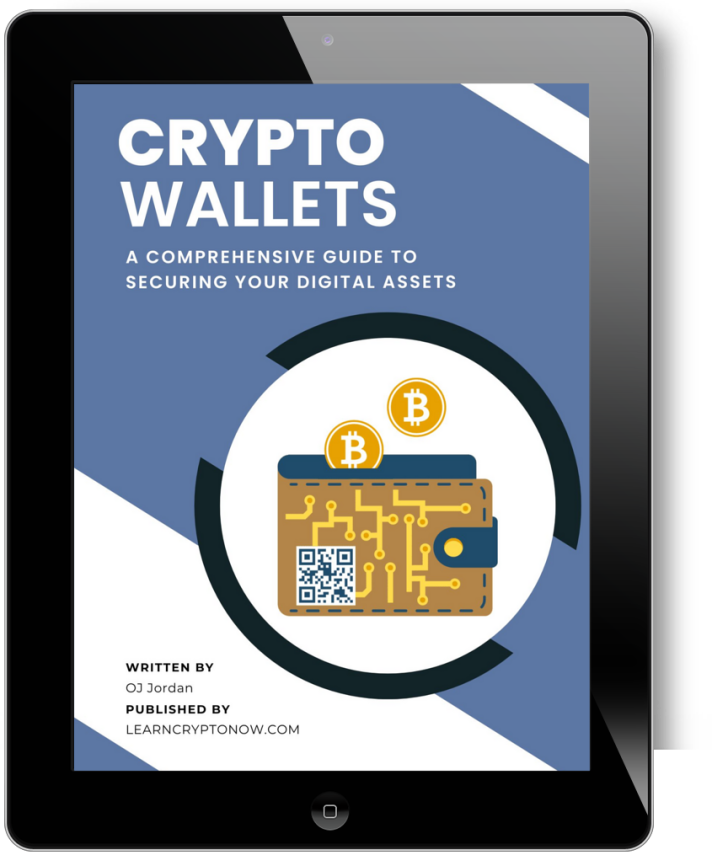
“Crypto Wallets” is a Free eBook to guide you in choosing the right wallet for you. All the popular Hot and Cold Wallets are reviewed in this useful guide, most of which I personally use, or have used in the past. Self-custodial and custodial services too.
Find out more at: https://www.ojjordan.com/crypto
Citations:
https://forum.trezor.io/t/recovering-wallet-with-passphrase-from-different-vendor/12087
https://www.reddit.com/r/TREZOR/comments/zn704y/importing_seed_phrase_to_another_wallet/
https://blog.trezor.io/bitcoin-addresses-and-how-to-use-them-35e7312098ff?gi=28aefc557a7c
https://www.hiro.so/blog/understanding-the-differences-between-bitcoin-address-formats-when-developing-your-app
https://guide.keyst.one/docs/3-btc-formats
https://www.reddit.com/r/ledgerwallet/comments/znmiu1/new_btc_account_native_segwit_taproot_segwit_or/
https://bitcoin.design/guide/glossary/address/
⚠️ DISCLAIMER ⚠️
The information contained in this video is for informational purposes only. Nothing herein shall be construed to be financial or legal advice. The content of this post reflects solely my own opinions. Purchasing cryptocurrencies poses considerable risk of losses.
Quote Of The Day
Passion fuels great work; love transforms work into art. Embrace the challenge for personal growth. #EmbraceTheChallenge #PersonalGrowth

Bitcoin Drops Again. Is It Time To Buy Yet?
Caught between fear and greed, BTC just dropped again this morning, hitting $65k. It’s a move I charted just 4 days ago and without a miss,…
Quote Of The Day
“The only place where success comes before work is in the dictionary.” – Vidal Sassoon This poignant quote underscores the fundamental truth that hard…

 Crypto-Corner